The Opium Wars: A History From Beginning to End by Hourly History
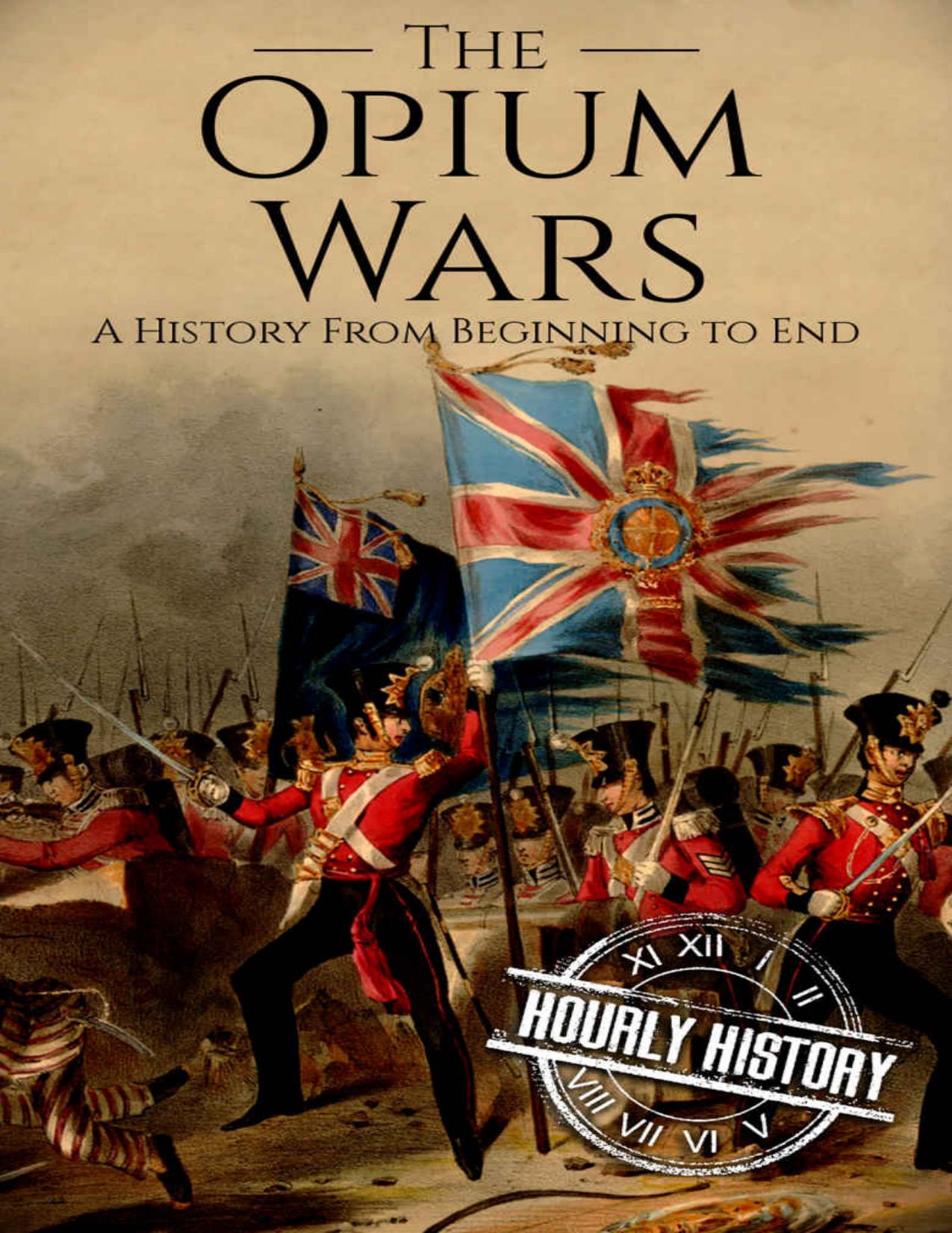
Author:Hourly History [History, Hourly]
Language: eng
Format: azw3, pdf
Publisher: Hourly History
Published: 2018-12-03T16:00:00+00:00
Chapter Five
The Inevitable Second Opium War
âA war more unjust in its origin, a war more calculated to cover this country with permanent disgrace, I do not know, and I have not read of.â
âWilliam Gladstone
In Canton, acts of aggression against British subjects continued after the signing of the Treaty of Nanking and the resumption of trade. These became so serious that in April 1847, the governor of Hong Kong, Sir John Davis, demanded compensation from Qiying, one of the Chinese commissioners who had negotiated the Treaty of Nanking. Unsatisfied by the response, Davis ordered Major-General George DâAguilar, the new commander-in-chief of British forces in China, to prepare to occupy Canton.
A fleet of British warships approached the forts at the mouth of the Pearl River on April 2, 1847, and Anunghoy Island, North Wangtong Island, and South Wangtong Island were bombarded and quickly occupied. The British fleet then sailed up the river and captured the remaining ten forts guarding the approaches to Canton. The British suffered no casualties during this operation (which became known as the Expedition to Canton) while nearly 900 Chinese cannons were captured, leaving Canton with virtually no effective defenses against a British invasion. With no alternative, Commissioner Qiying agreed to ensure that the people who had committed aggressive acts towards British merchants would be punished and that compensation would be paid.
Although it officially wasnât part of a war, the Expedition to Canton proved once again British military supremacy and emphasized the weakness of the Qing dynasty. However, China remained a potentially huge source of trade, and Britain wasnât the only country interested in exploiting this. In 1844, the Chinese authorities had signed the Treaty of Whampoa with the French. This gave French traders essentially the same privileges as the British had received under the Treaty of Nanking just two years earlier. The treaty did not please the British who had assumed that their military successes against the Chinese would give them most favored nation status in trade with China. Also in 1844, China signed the Treaty of Wanghia with the United States. This, in British eyes, was even worse because it not only guaranteed America equal trading rights with Britain but also gave them the right to buy land in five nominated Chinese ports.
Both these new treaties contained clauses that allowed them to be renegotiated after 12 years. Although no such clause had been included in the Treaty of Nanking, the British immediately began to pressure the Chinese to agree to a new version of this treaty. The British wanted the new treaty to include, amongst other things, permission for British merchants to trade in all areas of China, legalization of the opium trade, and English-language versions of treaties to take precedence over Chinese versions. The opium trade was a particular source of concern to the British. The Treaty of Nanking had not addressed it at all, and the importation of opium into China was technically illegal, though it was still taking place on a huge scale. Its
Download
The Opium Wars: A History From Beginning to End by Hourly History.pdf
This site does not store any files on its server. We only index and link to content provided by other sites. Please contact the content providers to delete copyright contents if any and email us, we'll remove relevant links or contents immediately.
The Vikings: Conquering England, France, and Ireland by Wernick Robert(84552)
Ali Pasha, Lion of Ioannina by Eugenia Russell & Eugenia Russell(40378)
The Conquerors (The Winning of America Series Book 3) by Eckert Allan W(38892)
The Vikings: Discoverers of a New World by Wernick Robert(37046)
Cecilia; Or, Memoirs of an Heiress — Volume 1 by Fanny Burney(32712)
Cecilia; Or, Memoirs of an Heiress — Volume 2 by Fanny Burney(32075)
Cecilia; Or, Memoirs of an Heiress — Volume 3 by Fanny Burney(32058)
Empire of the Sikhs by Patwant Singh(23189)
The Secret History by Donna Tartt(19443)
Hans Sturm: A Soldier's Odyssey on the Eastern Front by Gordon Williamson(18711)
Cat's cradle by Kurt Vonnegut(15539)
Pimp by Iceberg Slim(14778)
Sapiens: A Brief History of Humankind by Yuval Noah Harari(14546)
Norse Mythology by Gaiman Neil(13555)
Talking to Strangers by Malcolm Gladwell(13521)
Leonardo da Vinci by Walter Isaacson(13480)
4 3 2 1: A Novel by Paul Auster(12602)
Underground: A Human History of the Worlds Beneath Our Feet by Will Hunt(12223)
The Radium Girls by Kate Moore(12172)
